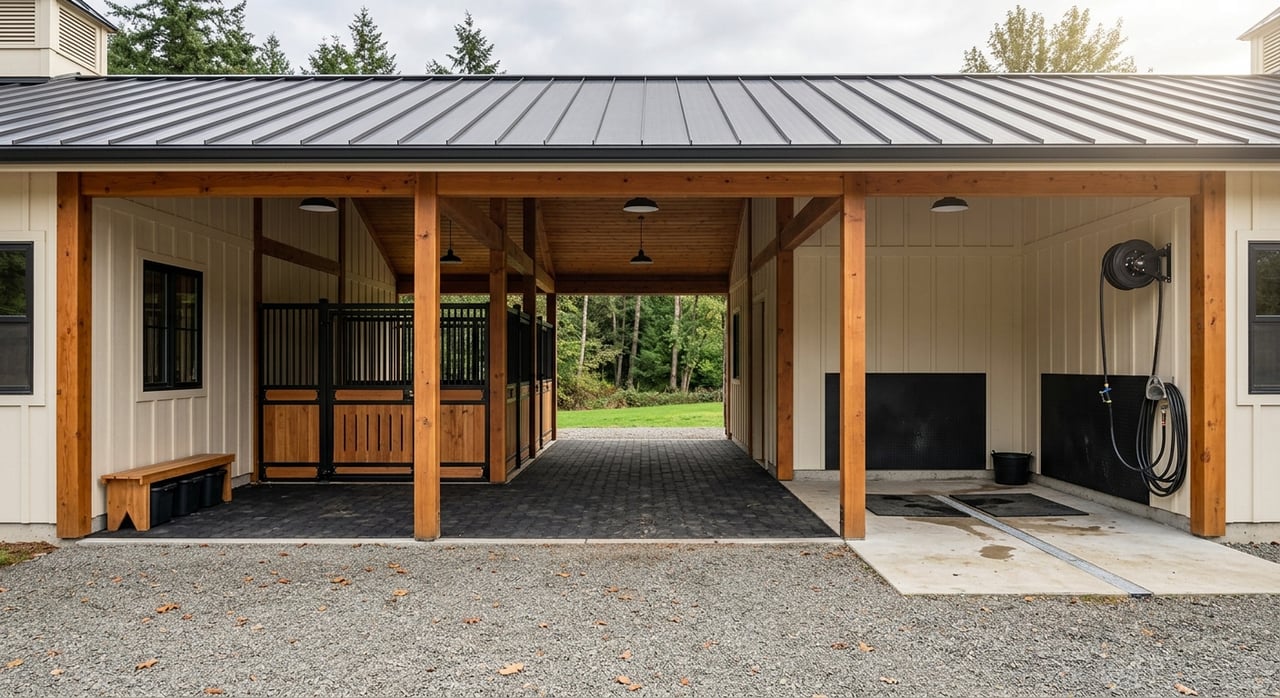
Buying a horse property in Snohomish can look straightforward at first glance. A few acres, a barn, and open ground may seem like all you need. But in unincorporated Snohomish County, the real question is whether the land actually works for your horses, your riding goals, and the improvements you may want to make later. This guide walks you through the details that matter most, so you can evaluate a property with more confidence before you write an offer. Let’s dive in.
Start With Legal Horse Use
Not every rural parcel supports the same kind of horse use. In unincorporated Snohomish County, horse-related uses are defined and regulated differently depending on the property’s zoning and overlays.
The county defines a stable as a structure where horses are kept for boarding, breeding, personal use, or training. It also distinguishes between a mini-equestrian center with 24 or fewer horses and an equestrian center with more than 24 horses. Whether those uses are allowed can depend on the zone, and flood-hazard overlays can further limit what is permitted.
If you plan to keep horses only for personal use, your review may be simpler. If you want to host lessons, rentals, shows, or other commercial activity, the process can become more restrictive and may require a conditional use permit, annual inspection, and a Fire Marshal certificate of occupancy.
That is why one of the first steps is to match your intended use to the parcel. A property that works well for private horse keeping may not work the same way for boarding or lesson operations.
Look Beyond Acreage
Acreage matters, but usable acreage matters more. Two parcels with the same size can perform very differently once you factor in drainage, soil, slope, and wet-season conditions.
In Snohomish County, drainage review can be triggered by site changes that seem fairly modest. That includes more than 2,000 square feet of new or replaced impervious surface or more than 7,000 square feet of clearing or grading. If you are thinking about adding an arena, turnout area, paddocks, or wider drive aisles, those rules can affect your plans.
Open land also does not always mean good horse ground. Parcel-specific soil reports can help you understand how the site may handle wet weather. Better-drained upland soils often function very differently from flatter, wetter ground that looks fine in summer but becomes muddy in other seasons.
When you walk a property, think about how horses will live on it day to day. Ask yourself whether turnout will stay usable through the winter, whether footing will hold up, and whether there is enough practical space for horses to move safely without creating constant mud problems.
Pay Close Attention to Drainage and Manure Management
Good horse property design is about more than convenience. In Washington, runoff from pasture, confined areas, and manure storage can affect water quality.
State guidance notes that livestock access to streams, manure storage areas, and runoff can contribute to bacteria, nutrients, and sediment in waterways. Recommended practices include keeping livestock away from water edges, storing manure so it cannot run off to waterways or groundwater, and using covered piles or compost systems.
For buyers, that means manure management should be part of your due diligence, not an afterthought. You should also think about roof runoff, low spots, and travel lanes that may stay muddy. Ecology guidance advises removing manure from yards and paddocks at least every three days and directing roof runoff away from manure.
A property with a beautiful setting can still become expensive and difficult if drainage and cleanup are not manageable. Ongoing maintenance is part of the real cost of owning a horse property in Snohomish.
Check Barns and Arenas Carefully
Existing improvements can add value, but only if they are usable and compliant. In Snohomish County, agricultural buildings, barns, pole buildings, fences, and other accessory structures commonly require permits and a site plan.
Even when a structure is permit-exempt, the county states that it still must comply with property-line setbacks and environmental rules. So if a parcel has an older barn, shed, or an area that seems perfect for a future arena, do not assume it is automatically legal or buildable as-is.
This is especially important if your long-term plan includes additional structures. Before you get too far into the process, confirm whether the site can support the barn, arena, wash rack, or storage building you have in mind without creating a major land-use issue.
Evaluate Trailer Access and Circulation
Horse properties need to work for vehicles as much as they work for animals. A driveway that feels adequate for daily cars may not function well for horse trailers, hay deliveries, or emergency access.
Snohomish County requires legal access for any new connection from a county road, and building permits require that access to be in place before issuance. A new driveway to a county-maintained road needs an access permit, and a new private road connection to a county road also requires review.
In practical terms, you should study driveway width, sight distance, turning room, and parking layout. A property becomes much easier to live with when a trailer can enter, turn, park, and leave without backing into the road.
If you are considering a property for anything beyond private use, this becomes even more important. Parking and trailer circulation are key parts of how a site functions safely and efficiently.
Understand Commercial Equestrian Rules
If your goals include boarding, lessons, or events, you will need a more detailed review. Snohomish County’s equestrian guidance includes added requirements for mini-equestrian centers and larger equestrian centers.
For example, a mini-equestrian center requires a minimum 5-acre site. The county also addresses parking and outside storage setbacks, open or covered arena setbacks, shielded lighting, hour limits, and parking standards for vehicles and horse trailers.
Even if you want a mostly private setup, these rules are still useful as a planning framework. They can help you think through where trailers will park, where equipment will go, and how your day-to-day use may affect nearby parcels.
Review Well and Septic Early
Water and septic are often hidden cost centers on rural properties. In Snohomish County, an approved well and on-site septic system approved by the county health department are required for construction of a residence or buildings with plumbing.
The county’s well review process includes mapping the well, septic tanks, drainfields, nearby buildings, roads, easements, and floodplain areas. Septic permits also require soil testing and a licensed designer or engineer.
For horse properties, placement matters. The Snohomish County Health Department advises keeping animals and manure storage at least 100 feet from a well. It also requires testing accepted drinking water wells for arsenic, and if levels are high, an approved treatment system and an arsenic disclosure on title are required.
This is a major reason to review utility infrastructure early. A property may have the right look and layout, but if well, septic, or future improvement plans do not align, your costs and options can change quickly.
Investigate Critical Areas and Floodplain Limits
Some of the biggest horse-property surprises are not obvious from a casual showing. In unincorporated Snohomish County, critical-area rules apply to wetlands, geologically hazardous areas, channel migration zones, critical aquifer recharge areas, and special flood hazard areas.
Buffers can extend beyond a visible wetland or stream. That means land that appears open and usable may still have limits on where you can build or improve it.
Flood hazard areas add another layer. If a parcel is in a flood hazard area, the county requires a flood hazard permit and an elevation certificate, and the process may also require a floodplain habitat assessment. Some flood plain properties may also be subject to additional shoreline requirements.
For buyers, this can affect where you place a barn, arena, paddock, or driveway. It is worth reviewing county maps and any recorded critical area site plans before you assume the usable area is as large as it appears.
Consider Riding Access Nearby
For some buyers, on-site functionality is only part of the equation. Easy access to nearby riding opportunities can make a meaningful difference in how much you enjoy the property.
Snohomish County Parks lists more than 100 miles of trails and designated equestrian trails. Locations include Centennial Trail, Lord Hill Regional Park, Paradise Valley Conservation Area, and Whitehorse Regional Trail.
Lord Hill is especially notable because it includes equestrian trails, horse trailer parking, and trailhead parking that accommodates up to 25 horse trailers and tow vehicles. The Nakashima Heritage Barn North Trailhead at the north end of the Centennial Trail also includes a trailer parking lot adjacent to the equestrian trail.
If trail access matters to you, check whether the property’s location supports the kind of riding routine you want. Nearby access can add a lot of lifestyle value, especially if you do not want every ride to start in the arena.
Questions to Ask Before Writing an Offer
Before you move forward, it helps to narrow your due diligence into a few clear questions:
- Is the whole parcel usable, or do wetlands, slopes, floodplain areas, or buffers limit horse use?
- Can the barn, arena, wash rack, or storage building you want be permitted on the site?
- Will your horse trailer fit the driveway, parking area, and turnarounds comfortably?
- Are the well, septic system, and drainage setup sufficient for current use and possible future improvements?
- If trail riding matters to you, are there nearby trailheads that actually accommodate horses and trailers?
These questions may sound basic, but they can save you from expensive surprises. On horse properties, the best purchase decisions usually come from understanding how the land functions, not just how it looks online.
Buying an equestrian property is rarely a standard home search. It takes a clear eye for land use, infrastructure, daily horse care, and the local rules that shape what is truly possible on a parcel. If you want help evaluating acreage and equestrian opportunities in Snohomish County, the Pacesetter Properties Team brings local residential expertise along with real horse-property insight to help you move forward with confidence.
FAQs
What should you check first when buying a horse property in Snohomish?
- Start by confirming the parcel can legally support your intended horse use in unincorporated Snohomish County, especially if you plan to board horses, teach lessons, or host events.
Why is usable land more important than total acreage on a Snohomish horse property?
- Usable land matters more because drainage, soil, slopes, wetlands, floodplain areas, and buffers can significantly reduce how much of the property actually works for horses.
Do barns and arenas on Snohomish horse properties need permits?
- Many barns, pole buildings, fences, and accessory structures commonly require permits and a site plan, and even permit-exempt structures still must meet setback and environmental rules.
What water and septic issues matter on a Snohomish horse property?
- You should review whether the property has an approved well and septic setup, whether the well meets water-quality requirements including arsenic testing, and whether animals and manure storage can be kept the recommended distance from the well.
Are there equestrian trails near Snohomish horse properties?
- Yes. Snohomish County Parks lists more than 100 miles of trails and designated equestrian trails, including options such as Lord Hill Regional Park and the Centennial Trail area with trailer parking access.