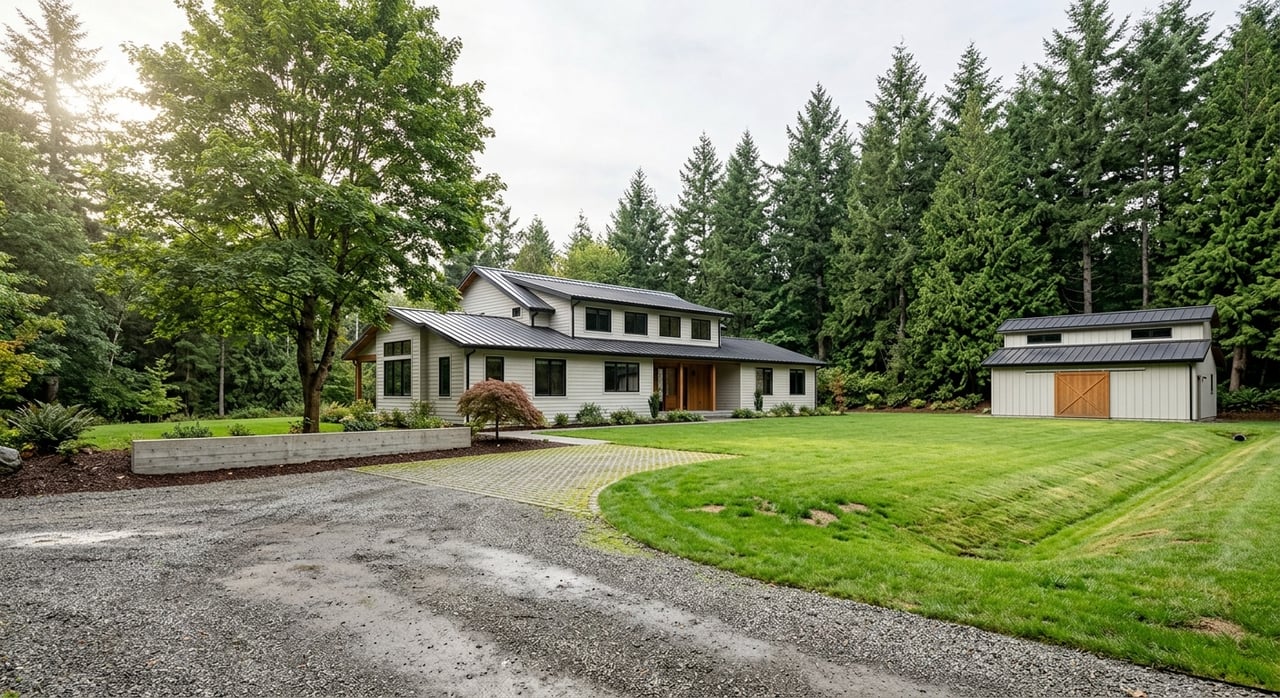
Acreage can be deceiving. In Woodinville, a property that looks wide open on paper may have far less functional land than you expect once zoning, critical areas, access, and utility constraints come into focus. If you are shopping for room to garden, keep horses, add outbuildings, or simply enjoy more privacy, it helps to know that the real question is not just how many acres a parcel has, but how many of those acres are truly usable. Let’s dive in.
Why usable acreage matters in Woodinville
In the Woodinville area, acreage is a jurisdiction-first question. The City of Woodinville notes that more than half of ZIP code 98072 is actually outside the incorporated city, in unincorporated King County and Snohomish County. That means two homes with similar lot sizes and a Woodinville mailing address may be governed by very different rules.
This matters because true acreage-style opportunities are limited inside city limits. The city is only 6.13 square miles, and most of its land is already in single-family residential use, with only about 14% considered undeveloped. So when you see a larger parcel in the Woodinville market, your first step is to confirm exactly where it sits and which jurisdiction controls it.
Start with jurisdiction and zoning
Before you picture barns, paddocks, gardens, or future improvements, confirm whether the property is inside the City of Woodinville or in unincorporated King County. King County states that cities manage their own zoning and permits, while the county manages unincorporated areas. That alone can shape what the land can support.
In unincorporated King County, zoning categories include rural and agricultural districts such as RA-2.5, RA-5, RA-10, and A-10. Some parcels may also sit in or near an Agricultural Production District, where the county says the principal land use should be agriculture and parcels should remain large enough for commercial agriculture. In practical terms, the same five-acre listing can mean very different things depending on the zone and surrounding land-use rules.
Tools buyers should check early
King County recommends using its property research resources before making assumptions about a parcel. These tools can help identify zoning, district overlays, permits, and development conditions.
A smart early review should include:
- Parcel Viewer
- Districts and Development Conditions Report
- Property research guide and worksheet
- Recorded deeds, plats, and surveys
If you are serious about a property, these records can help you move from a marketing description to a more realistic picture of how the land functions.
Gross acreage is not the same as usable acreage
One of the biggest mistakes buyers make is focusing on gross lot size alone. In Woodinville, especially near the Sammamish River corridor, a parcel may appear broad and open but still have meaningful limitations tied to floodplain conditions, drainage patterns, or agricultural use.
King County describes the upper Sammamish River corridor as a floodplain valley that is more than a mile wide in places. Land use there includes open space, the Sammamish Valley Agricultural Production District, and urban development. So a flat valley parcel may look ideal at first glance, but that does not automatically mean all of the land is buildable, fenceable, or suitable for your intended use.
What can reduce functional land area
King County’s critical-area review can involve several site constraints that directly affect usable land. These may include:
- Wetlands
- Streams
- Flood zones
- Steep slopes
- Setback areas
- Shoreline-related issues
- Impervious lot coverage limits
When a proposal is near a wetland, stream, wildlife habitat area, or steep slope, the county may require additional reports such as wetland delineation, stream delineation, wildlife habitat assessment, or geotechnical review. That is why buyers should think in terms of net usable area, not just total acreage.
Why topography changes the buying decision
Topography can shift the value of acreage in a big way. A parcel with dramatic slopes, drainage channels, or oddly shaped access corridors may technically have the acreage you want, while offering far less practical space for daily use.
Even if you are not planning major construction, topography still matters. It can affect where you place fencing, how water moves across the site, where animals can turn out safely, and whether you can create level usable areas without triggering additional grading review.
For buyers seeking horse property or hobby-farm potential, this is especially important. A property may have enough raw land on paper, but once slopes, buffers, and access are factored in, the workable footprint can shrink quickly.
Access and easements can limit how land works
Usable acreage is not only about what you can see from the driveway. Recorded easements may affect access roads, pedestrian paths, utility lines, storm drainage pipes and ditches, erosion-control slopes, and open-space areas. Those rights and restrictions can change how you enter, cross, or improve the property.
King County’s recording guidance points buyers to deeds, plats, Parcel Viewer, and recorded surveys to understand how a property is legally accessed and what rights burden or benefit it. A parcel can feel spacious in person and still have portions of land that are not as flexible as they appear.
Questions to ask about access
As you evaluate a Woodinville-area acreage property, ask:
- Is access direct, shared, or easement-based?
- Are there utility or drainage easements crossing useful portions of the site?
- Does the survey match how the land is being used today?
- Are there recorded restrictions that affect fencing, structures, or improvements?
These are the kinds of details that shape daily enjoyment of the property, not just future development plans.
Water, sewer, septic, and wells matter more than buyers expect
Utilities should be verified parcel by parcel. The Woodinville Water District advises customers to use its interactive map to determine whether a property is within the district. That means you should not assume water availability based on a nearby home or a familiar address.
Wastewater service also matters. For properties not connected to public sewer, King County’s septic requirements become part of your due diligence. The county says homes with septic systems must be inspected by a certified on-site system maintainer before transfer of title, and the seller must record and provide the Notice on Title.
If the property has a private well, Washington Department of Health guidance says private well owners are responsible for testing their own water. It also notes that in most counties, a seller may be asked to provide sampling results when a home with a private well is bought or sold. For buyers, this is another reminder that acreage utility questions should be confirmed, not assumed.
Small improvements can use up land fast
Many buyers imagine that once they buy acreage, adding useful features will be simple. In reality, driveways, barn pads, storage buildings, turnout areas, and arenas can consume land faster than expected.
In unincorporated King County, some smaller improvements may be exempt from a building permit, such as a storage shed of 200 square feet or less or fences 6 feet high or less, unless the property contains critical areas. But that does not mean the broader site work is automatically simple. Land-use, clearing, or grading permits can still be required for certain excavation, fill, grading, or creation of new impervious surface.
Why this matters for acreage planning
A parcel may have enough room for your goals in a general sense, but the layout can become tighter once you account for:
- Driveway width and turnaround space
- Drainage needs
- Building setbacks
- Critical-area buffers
- Impervious surface limits
- Grading thresholds
This is often where a property shifts from “plenty of land” to “enough land, but only with careful planning.”
Horse and hobby-farm use involves more than lot size
For equestrian buyers, usable acreage is about function, not just scale. King County’s Livestock Management Ordinance says the minimum site size to keep a large animal, including an adult horse, is 20,000 square feet. It also says that one large animal per two acres usually does not require a Farm Management Plan if ordinance standards are followed.
But parcel size is only part of the picture. The same fact sheet states that livestock housing must be at least 25 feet from any boundary line, manure storage must be at least 35 feet from a property boundary, and pasture or confinement areas near streams and wetlands need protective buffers. Those spacing rules can reduce how much of the property is realistically available for turnout, structures, and circulation.
What equestrian buyers should picture on-site
If you are evaluating a horse property, try to visualize the full working layout rather than just the acreage number. Consider whether the site can comfortably support:
- Turnout space
- Fencing layout
- Manure storage
- Drainage management
- Barn placement
- Safe access for trailers and service vehicles
This is one area where local acreage experience can make a real difference. A parcel may technically allow a use, but still fall short in everyday functionality.
A practical Woodinville acreage checklist
When you are comparing properties, it helps to review each parcel through the same lens. A simple checklist can keep you focused on function instead of marketing language.
Review these items before you rely on the acreage number
- Confirm whether the property is in the City of Woodinville or unincorporated King County
- Verify zoning and any agricultural district context
- Check for wetlands, streams, floodplain, slopes, and required buffers
- Review recorded easements, deeds, plats, and surveys
- Confirm water district status, sewer connection, septic status, or well details
- Ask how access works in legal and practical terms
- Consider how much land remains after setbacks, drainage, and circulation needs
- If livestock use is planned, review site size, setbacks, and buffer requirements
The goal is simple: understand what the land can actually do for you before you fall in love with the acreage count.
The bottom line on usable acreage in Woodinville
In Woodinville, usable acreage is rarely just a math problem. It is the result of jurisdiction, zoning, topography, critical areas, access, utilities, and intended use all working together. Two parcels with the same advertised acreage can offer very different real-world value depending on those factors.
If you want space for privacy, outbuildings, gardening, or horse use, careful due diligence is what protects your purchase. A thoughtful review upfront can help you choose a property that fits your goals now and still works well in the years ahead.
If you are considering acreage in Woodinville or nearby areas, the right guidance can help you look past the listing and evaluate how a property truly lives. The Pacesetter Properties Team brings local market knowledge and hands-on acreage and equestrian experience to help you assess properties with more clarity and confidence.
FAQs
What does usable acreage mean for a Woodinville property?
- Usable acreage is the portion of the land that remains practical for your intended use after zoning, critical areas, setbacks, access, utilities, and site constraints are considered.
Why can two Woodinville properties with the same acreage feel so different?
- Two parcels can have the same gross acreage but very different functional land area because of floodplain conditions, wetlands, slopes, easements, access layout, or utility limitations.
How do I check zoning for a Woodinville-area acreage property?
- Start by confirming whether the property is inside the City of Woodinville or in unincorporated King County, then review King County’s property research tools such as Parcel Viewer and the Districts and Development Conditions Report.
Do critical areas affect usable acreage in Woodinville?
- Yes. Wetlands, streams, flood zones, steep slopes, shoreline-related issues, and required buffers can reduce how much of the parcel is practical for building, fencing, animal use, or other improvements.
What utility questions should buyers ask about Woodinville acreage?
- Buyers should verify whether the parcel is in the Woodinville Water District, whether it is connected to public sewer or served by septic, and whether a private well is present and has current water-testing information.
Can I keep horses on a Woodinville-area acreage property?
- That depends on parcel size, jurisdiction, setbacks, buffers, and site layout. King County says the minimum site size to keep one large animal, including an adult horse, is 20,000 square feet, with additional standards that can affect how the property functions.