On April 16, 2026, a routine repair permit crossed a planner's desk at Kirkland City Hall. The application was for dock maintenance at Homeport Marina, with the physical repair work assigned to Waterfront Construction Inc. Nothing about the project sounds unusual. A dock needed fixing. But before a single piling could be pulled, the city's distribution list sent the file to the Washington Department of Ecology's shoreline permit review desk and to Karen Walter, the Muckleshoot Indian Tribe's Watersheds and Land Use Team Leader. A repair that most homeowners would think of as a weekend contractor job had already become a matter for two government bodies beyond the city itself.
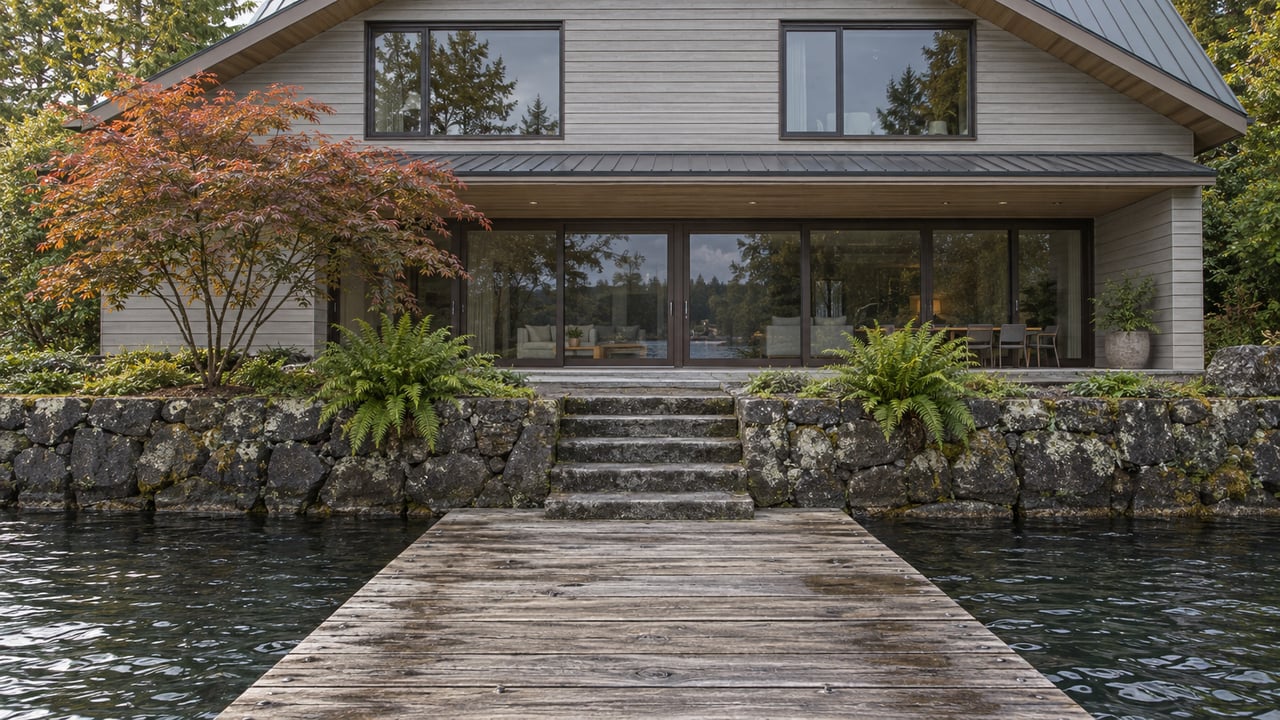
That distribution list is the story. If you're buying or selling on Kirkland's Lake Washington shoreline, the dock that comes with the property is rarely just a physical structure. It's a permit history, and in most cases, an old one that no longer matches the rules currently on the books.
What the Code Actually Allows Today
Kirkland's shoreline rules live in Chapter 83 of the Kirkland Zoning Code, the city's Shoreline Master Program, most recently overhauled under Ordinance 4701 in 2020. The current standard caps a private pier or dock at 150 feet, or at the length set by neighboring docks, whichever is shorter. A perpendicular platform off the walkway, what the code calls an "ell," is limited to 6 feet wide and 26 feet long. Only one pier or dock is permitted per property, a rule the city has applied even to shared piers serving multiple condominium buildings.
None of this is new information inside City Hall. It's also exactly why so many docks along this shoreline don't match it. Structures built decades before these dimensional standards existed are grandfathered in as legally nonconforming. They're allowed to stay exactly as they are. What they're not automatically allowed to do is get bigger, or in many cases, get rebuilt to the same footprint, once a property owner triggers the kind of construction activity that puts the structure back in front of a reviewer.
The jurisdiction itself is measured with unusual precision. For Lake Washington, the Ordinary High Water Mark, the line from which shoreline authority extends, is fixed at 18.5 feet in elevation under the NAVD 88 datum. That's not an estimate a surveyor eyeballs. It's the number the city and the Department of Ecology use to decide whether a stretch of shoreline falls under Chapter 83 at all.
The Fight That Shaped the Fine Print
The 2020 update didn't move through council quietly. A group calling itself the Kirkland Sensible Shorelines Coalition formed specifically to push back on parts of it, gathering more than 120 signatures on a petition and raising concerns about dock-size restrictions and what would happen to boathouses. The coalition was co-chaired by Ken Davidson and Dick Sandaas, with board member Bryan Loveless and biologist Brad Thiele weighing in on the technical side.
The sharpest disagreement was over boathouses specifically. Under the draft rule, triggering more than 50 percent of a structure's replacement cost in development activity meant a nonconforming overwater structure had to come down. Councilmember Kelli Curtis proposed carving out an exception for boathouses, arguing their historical character was worth preserving even when that threshold was crossed. The council passed her amendment. Councilmember Toby Nixon separately pushed to let boat launches and buoys stay in place if an owner could show photographic or permitting evidence of their history.
The practical result is a code that treats a boathouse and an ordinary dock addition differently, not because one is more structurally sound than the other, but because one had a councilmember arguing for it in 2020 and the other didn't. A buyer evaluating a property with an old boathouse is in a different legal position than a buyer evaluating a property with an old dock, even if both structures are the same age and in the same condition.
Who Actually Reviews a Repair
A city shoreline permit is the starting point, but it's rarely the only stop. Here's how the stack typically runs on a Kirkland waterfront repair:
| Agency | Role | Typical Timeline or Threshold |
|---|---|---|
| City of Kirkland | Shoreline permit review under Chapter 83 KZC | Case by case, tied to substantial development threshold |
| WA Department of Ecology | Sets the dollar threshold for "substantial development" | $28,000 for freshwater dock replacement, in effect since August 2023 |
| WA Department of Fish and Wildlife | Hydraulic Project Approval for any in-water work | Standard review runs about 45 days |
| Muckleshoot Indian Tribe | Watersheds and Land Use consultation | Copied on applicable shoreline filings as a matter of course |
The Ecology threshold matters because it determines whether a project needs the full substantial development permit process or can move through a lighter exemption path. Since August 5, 2023, that number has sat at $28,000 for a freshwater dock built to replace an existing one at equal or smaller size. The next inflation adjustment isn't due until 2028.
Real repair costs on this shoreline routinely clear that line before a contractor shows up. Bulkhead replacement commonly runs $500 to $1,500 per linear foot, which means a modest 75 feet of shoreline can carry a repair bill of $37,500 to $112,500. Dock and deck repairs tied to moisture damage, a documented issue for homes sitting this close to the lake, often land in the $40,000 to $60,000 range. Both figures sit well above the exemption line, which means a large share of the real repair work happening on this shoreline right now isn't quietly exempt. It's in full-review territory, with the city, the state, and potentially the Tribe weighing in before work begins.
What the Permit File Tells You That the Listing Doesn't
Current listings along Kirkland's waterfront show how wide the pricing spread runs once water access enters the picture. A two-bedroom condo at Holmes Point Drive NE was listed near $1.4 million as of late September 2026, while a four-bedroom home on Lake Washington Boulevard NE carried a $6,695,000 asking price the same month. Square footage and finish level explain part of that gap. Dock condition, permit history, and how much of the existing structure is legally nonconforming explain more of it than most buyers realize when they're standing on the deck admiring the view.
A dock's permit file often says more about a property's true condition than the photos do. If the file shows a clean shoreline permit, a completed Hydraulic Project Approval, and no open code questions, a buyer is stepping into a structure with a known, documented status. If the file shows nothing, or shows a repair that predates the 2020 update, the next owner may be the one who discovers the gap between the dock and the current code, usually right when they want to fix something.
For sellers, this is squarely a preparation question, the same kind of forward planning that shapes any strong listing strategy on this shoreline. Pulling the permit history before a home goes on the market, rather than after an inspection raises the question, keeps the timeline in the seller's control.
Before You Write an Offer
How long should you plan for if the dock needs work after closing? The Hydraulic Project Approval alone runs about 45 days, and it typically doesn't start until the city and state shoreline reviews are also underway. Buyers who assume a repair permit will be quick because the dock has existed for decades are usually working from the wrong model. Build the timeline around the slowest agency in the stack, not the fastest.
Does a boathouse get the same treatment as a dock addition? Not under Kirkland's current code. The 2020 amendment gave nonconforming boathouses a specific carve-out that ordinary dock work doesn't share. A property with a legacy boathouse and a property with a legacy dock can face very different review paths for what looks, on the surface, like a similar repair.
If you're evaluating a home on Kirkland's waterfront, whether you're the one selling it or the one about to make an offer, the dock's paper trail deserves the same attention as its pilings. Pacesetter Properties Team works with clients across Kirkland's shoreline and can help you pull that history before it becomes a surprise. Reach out before you write the offer, not after.